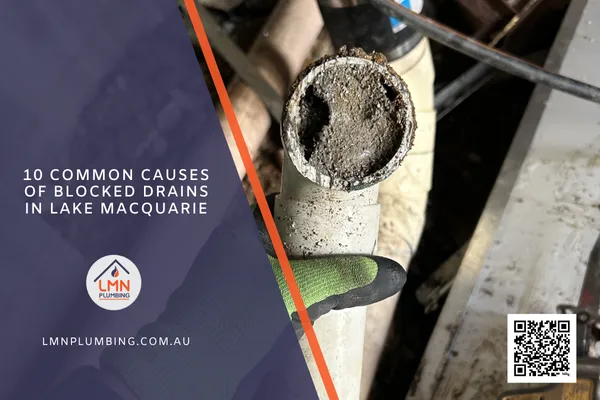
10 Common Causes of Blocked Drains in Lake Macquarie.
Blocked drains are one of the most common plumbing issues for homes and businesses in Lake Macquarie. LMN Plumbing is called out to issues when they have become a problem for the homeowner or business in Lake Macquarie.
While blocked drains may start as a minor inconvenience, if left untreated, blocked drains can lead to flooding, bad odours, property damage, and costly repairs as sewage and grease enter the building or garden.
At LMN Plumbing, we’ve helped countless Lake Macquarie locals get their drains flowing again. Here are the 10 most common causes of blocked drains we see in Lake Macquarie—plus tips on how to avoid them.
1. Tree Root Intrusion
Tree roots are one of the biggest culprits behind blocked drains in Lake Macquarie, especially in older properties with clay pipes. Roots seek out moisture and grow into cracks, causing major blockages or even pipe collapse.
It doesn't take much to invite them in. Clay pipes were the standard for decades for homes across Lake Macquarie, and they're jointed rather than sealed, which means every join is a potential entry point. Add in a hot summer, a leaky joint, and a thirsty gum tree nearby, and you've got the perfect setup — roots follow the moisture straight into the pipe, and when its a sewer pipe they are getting manure to feed them too and then keep growing once they're inside.
Once a root gets a foothold, it doesn't stop. Fine root hairs push through hairline cracks first, then thicken over time into a dense mass that can choke the pipe almost completely. What starts as a slow drain or the odd gurgle from your toilet can turn into a full blockage within a matter of months — and in the worst cases, the pressure from an expanding root system will crack or collapse the pipe outright, turning a drain clean into a full pipe replacement.
PVC pipes which are used today are far more resistant to root intrusion than old clay pipes, but they're not bulletproof. Roots don't force their way through solid PVC — they get in through the weak points. The most common entry is a poorly sealed or degraded joint, where the rubber ring seal has perished, shrunk, or wasn't fitted properly to begin with. Ground movement is the other big one: shifting or settling soil can pull a joint slightly apart or crack the pipe at a weak point, and once there's even a small gap, root hairs will find it and push through, following the moisture and nutrients leaking from inside. From there it's the same story as clay pipes — a fine root works its way in, then thickens over time until it's choking the line.
The main difference is that with PVC, intrusion usually points to a specific defect (a bad joint, pipe damage, or incorrect installation) rather than being a matter of time, which is why LMN Plumbing uses a drain camera and conducts camera sewer or stormwater inspections. If your home has regular blockages in a property it is worth booking a drain inspection.
Signs you might have root intrusion:
Slow-draining sinks, showers, or toilets that don't improve after a plunge
Gurgling sounds from drains when the washing machine or dishwasher runs
Recurring blockages in the same spot, even after clearing
Lush, unusually green patches of lawn above the pipe run (a sign wastewater is leaking out)
Sewage smell in the yard
Properties in older Lake Macquarie suburbs with established trees — like Boolaroo, Speers Point, Toronto, and similar leafy pockets — are particularly exposed, simply because the pipes are older and the root systems have had decades to establish themselves.
The good news is root intrusion is very manageable if you catch it early. A camera inspection will tell you exactly where the roots have gotten in and how bad the damage is, and from there we use a jetter, which uses high-pressure water to cut through the roots and restore flow without digging up the yard. However, if the issue is going to be a frequent issue, then replacing a section of pipe or removing the clay pipe and replacing it with PVC could be the best solution.

2. Fat, Oil & Grease Build-Up
Pouring cooking oil or grease down the sink may seem harmless, but once it cools, it solidifies and sticks to your pipes. Over time, this creates a sticky mass that traps food scraps and causes severe clogs. Fat, oil and grease are issues LMN Plumbing is often called to in both homes and businesses across Lake Macquarie, from Cardiff and Toronto through to Morisset and Mannering Park.
Pouring cooking oil, dripping, or grease down the sink might seem harmless at the time, but once it cools, it solidifies and clings to the inside of your pipes. Layer by layer, that sticky residue builds up and traps food scraps, coffee grounds, and other debris passing through, narrowing the pipe until water can barely get through at all. It's a particularly common issue in properties with narrow or ageing pipework, and it tends to hit hardest in winter, when cooler weather makes fats and oils set faster. Left untreated, fat, oil and grease build-up leads to slow-draining sinks, bad odours, and eventually a complete blockage which is where we come into professional clear the blockage with our high-speed chain snake.
The fix is simple — never pour fat or oil down the sink, scrape pans into the bin or a container instead and leave it to solidify. Once it's solid, you can put it in the bin. If you're already noticing slow drainage, its probably time for a clean to restore proper flow before it turns into a bigger problem.
For restaurants and cafes, we carry out quarterly cleans to remove the risk of blockages closing the kitchen or costly call-out fees.

3. Hair Build-Up
Hair mixed with soap and shampoo can easily clog bathroom drains. It collects in U-bends and shower wastes, restricting flow and leading to slow-draining water. Hair build-up is one of the most common causes of slow and blocked bathroom drains we see across Lake Macquarie homes.
When you clean your bathroom, it's a good idea to remove the plug and just pull out the loose hair and wipe and clean away the soap scum that forms a sticky, tangled mass that catches on the inside of the pipe.
Once in the drain, i tends to build up fastest in U-bends and shower wastes, where the bend in the pipe gives hair and residue a place to snag rather than flow straight through.
Over time, that build-up narrows the pipe, slows drainage, and creates the perfect trap for more hair, soap, and grime to collect on top of it. Bathrooms with longer hair in the household tend to see this issue more often and more frequently.
If left long enough, a hair blockage will stop water draining altogether, and in shared or rental bathrooms it's often the most frequent call-out we get. Removing the drain snake or hydro jet clean will clear the build-up quickly, and a simple hair catcher over the drain is the easiest way to stop it becoming a recurring problem.

4. “Flushable” Wipes & Hygiene Products
Despite the label, "flushable" wipes don't break down the way toilet paper does. Toilet paper is designed to disintegrate almost immediately in water, but most wipes hold their shape for hours — some for weeks — even after being flushed.
On their own, that's bad enough, but they rarely travel alone. Once they're in the pipe, wipes tangle and grab onto anything else moving through the system. That mass doesn't stay put either — it snags in bends and joints, keeps growing as more waste sticks to it, and can eventually block the sewer line completely. When that happens, the backup has nowhere to go but back up through the lowest drain in the house, which usually means a messy, unpleasant overflow rather than a simple slow drain, It is an avoidable cause of sewer blockages we see across Lake Macquarie homes, and the fix is simple: bin it, don't flush it, no matter what the packet says.
This is the same for cotton buds, kitchen towels, and sanitary items. TheHunter Water ads remind us, only flush the three Ps down the toilet: pee, poo, and toilet paper.
If you do get a blockage, the first task is to try plunging the toilet and see if you can get water down the toilet. If you don't have any luck clearing the toilet, then you will need to give us a call; we have lots of equipment options we can use to help move the blockage on: commercial plungers, a sewer machine, a chain snake and a high-pressure jetter.
5. Food Scraps
Dishwashers and kitchen sinks often carry food scraps down the pipes. Even small bits of rice, pasta, and coffee grounds can build up and form stubborn blockages.
6. Soap Scum
Traditional soaps can leave behind a residue that combines with minerals in water, creating a hard, chalky build-up. Over time, this narrows pipes and slows drainage.
7. Foreign Objects
Children’s toys, toothbrushes, or jewellery accidentally flushed or dropped down drains are a surprisingly common cause of plumbing call-outs. These items often get lodged in bends or traps.
8. Broken or Collapsed Pipes
Older or poorly installed pipes can crack, sag, or collapse. This stops water from flowing freely and often requires CCTV inspections and pipe replacement to fix.
9. Poor Drain Installation
Drains that are incorrectly installed may have uneven gradients, sharp bends, or poor alignment. This encourages water pooling and recurring blockages.
10. Heavy Rain & Stormwater Overload
During heavy storms, stormwater drains can become overloaded with leaves, dirt, and debris. This can cause flooding in yards, driveways, and even garages.
How LMN Plumbing Fixes Blocked Drains
We don’t just clear blockages—we find the cause and fix it properly. Our services include:
✅ CCTV Drain Inspections – Pinpointing the exact issue inside your pipes
✅ High-Pressure Jet Blasting – Clearing grease, roots, and debris safely
✅ Pipe Repairs & Replacement – Long-term solutions for cracked or collapsed pipes
✅ Preventative Maintenance – Stopping blockages before they start
Need a Blocked Drain Plumber in Lake Macquarie?
Don’t let a small blockage turn into a major plumbing emergency. If you’re noticing slow drains, gurgling noises, or bad smells—it’s time to act.
📞 Call LMN Plumbing on 0431 558 440
LMN Plumbing – keeping Lake Macquarie drains clear, safe, and reliable.